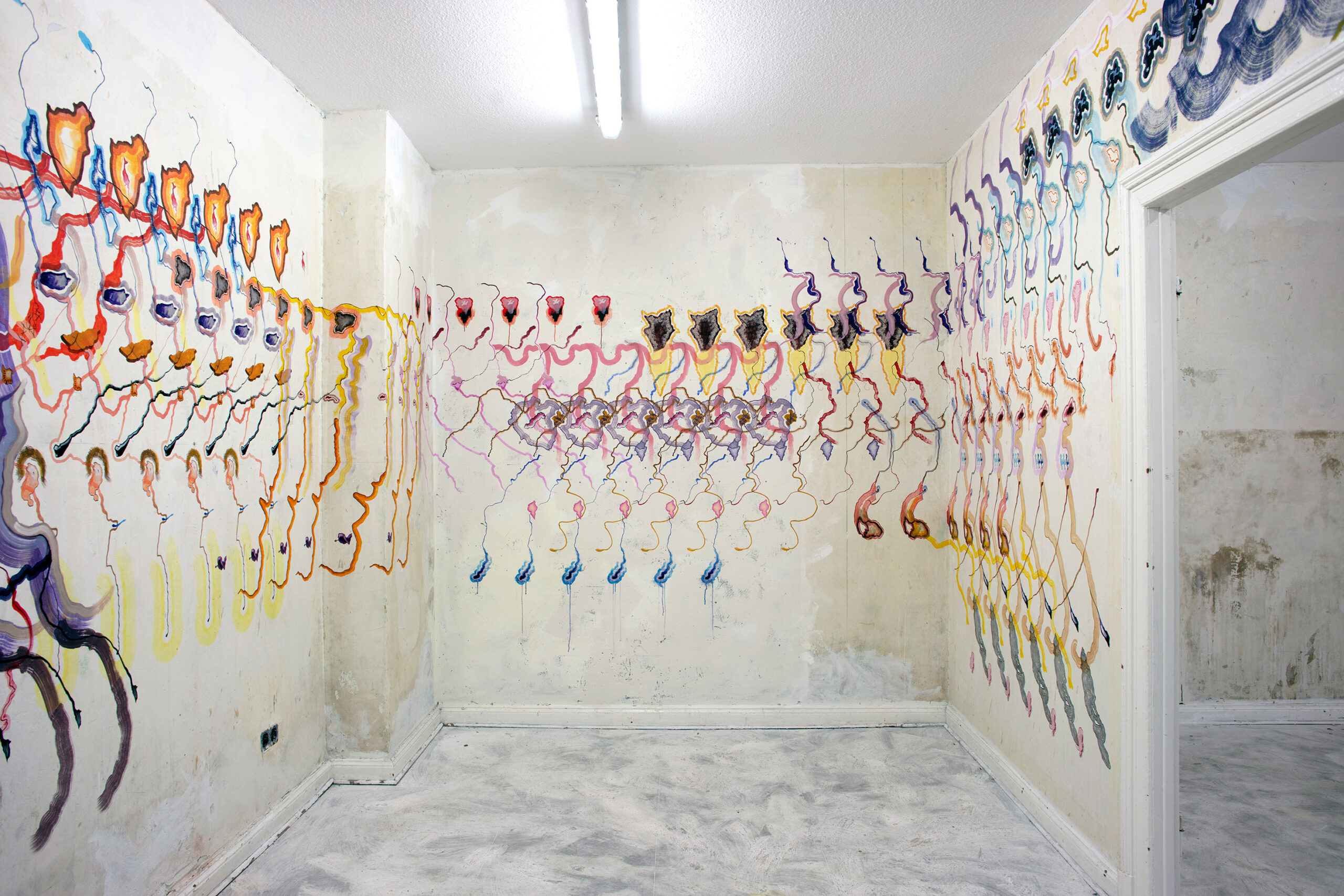
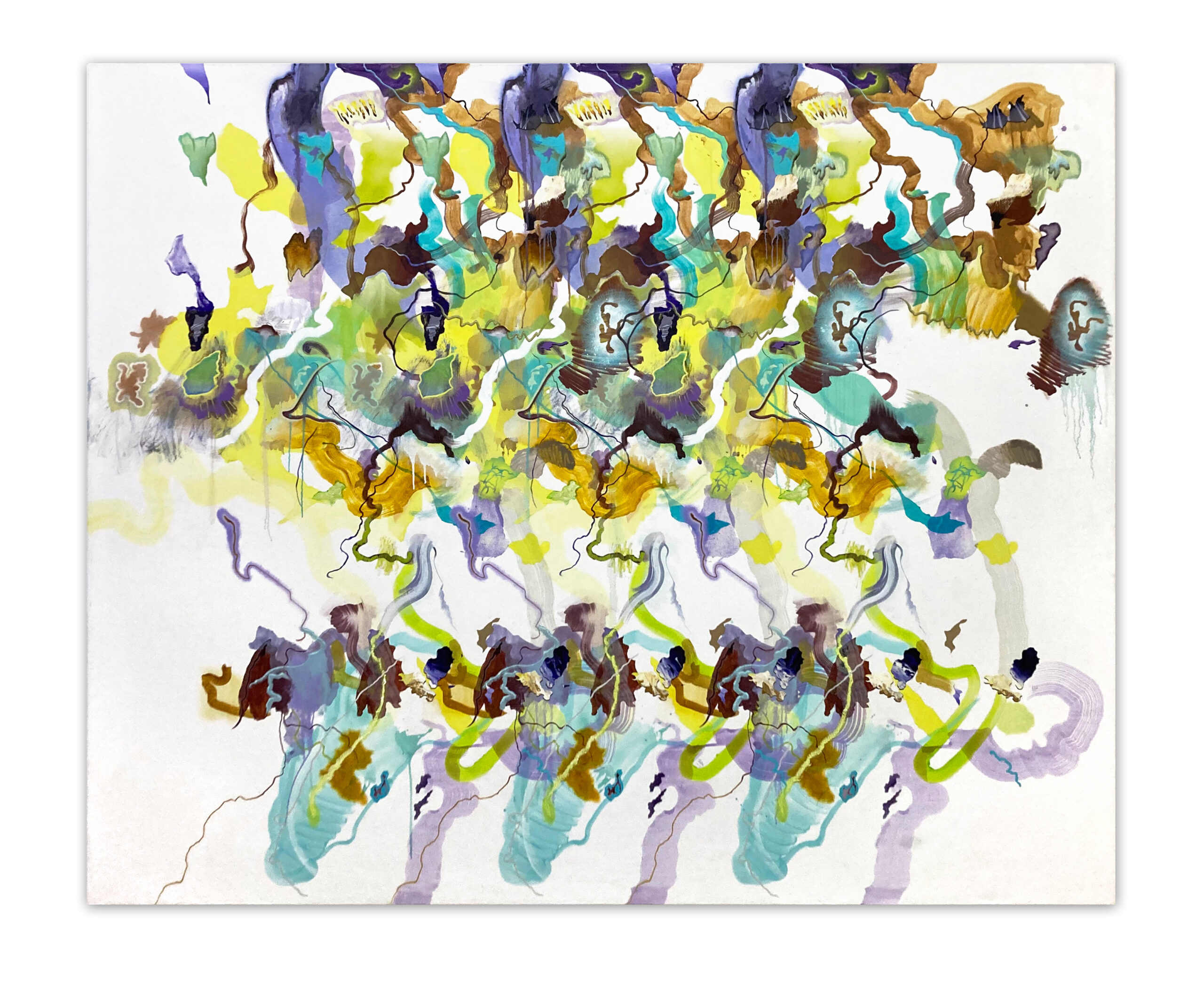
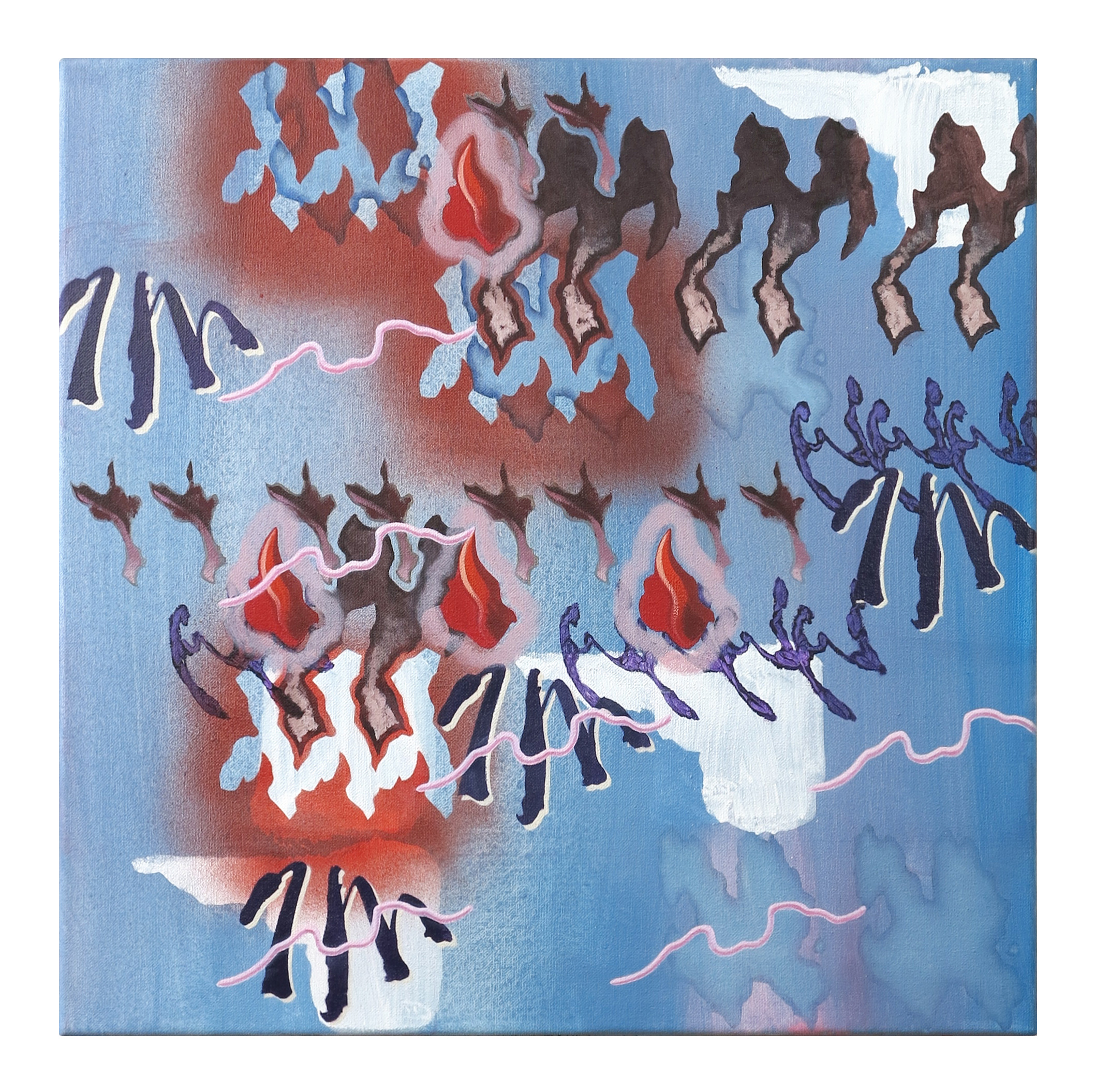
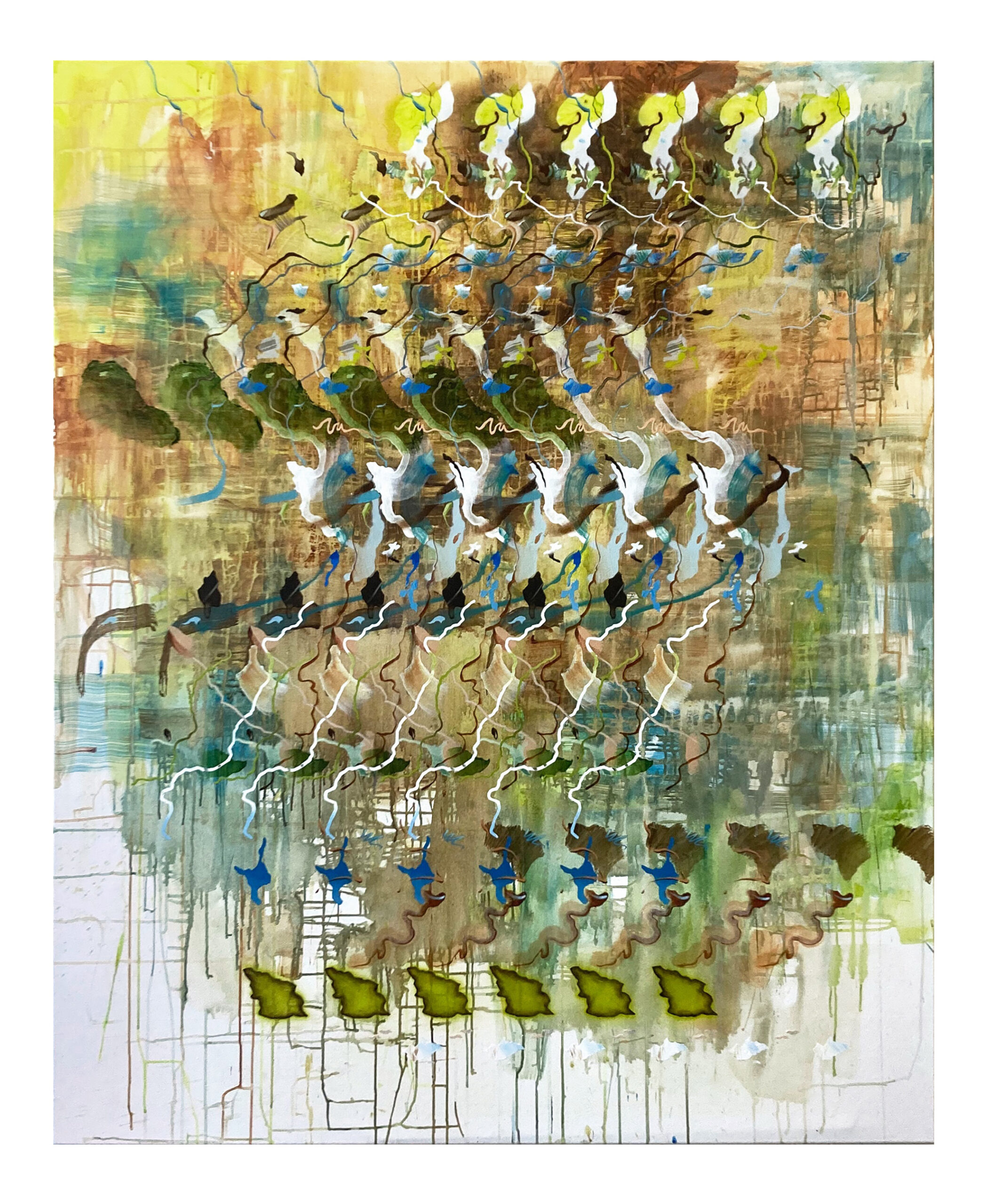
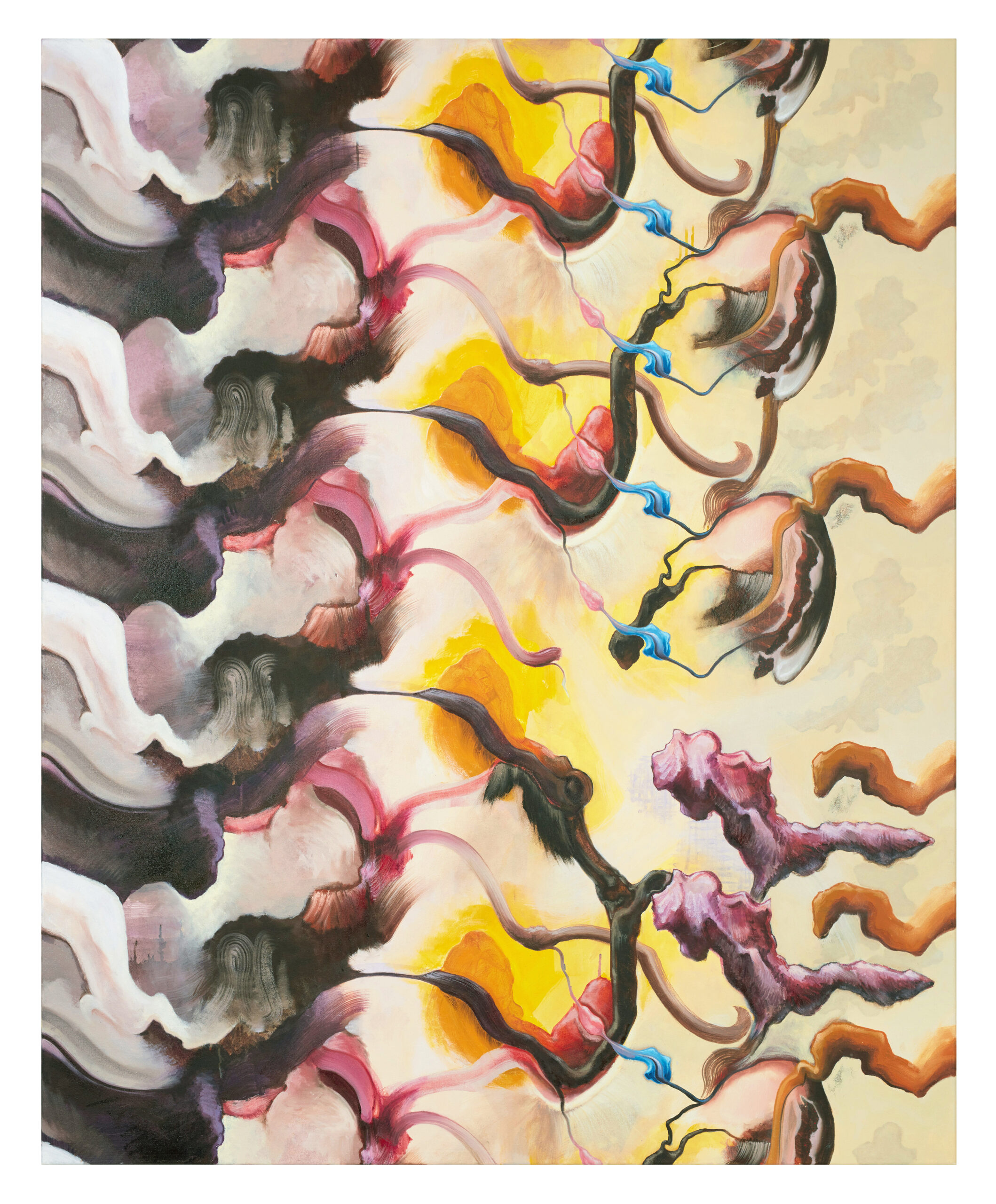
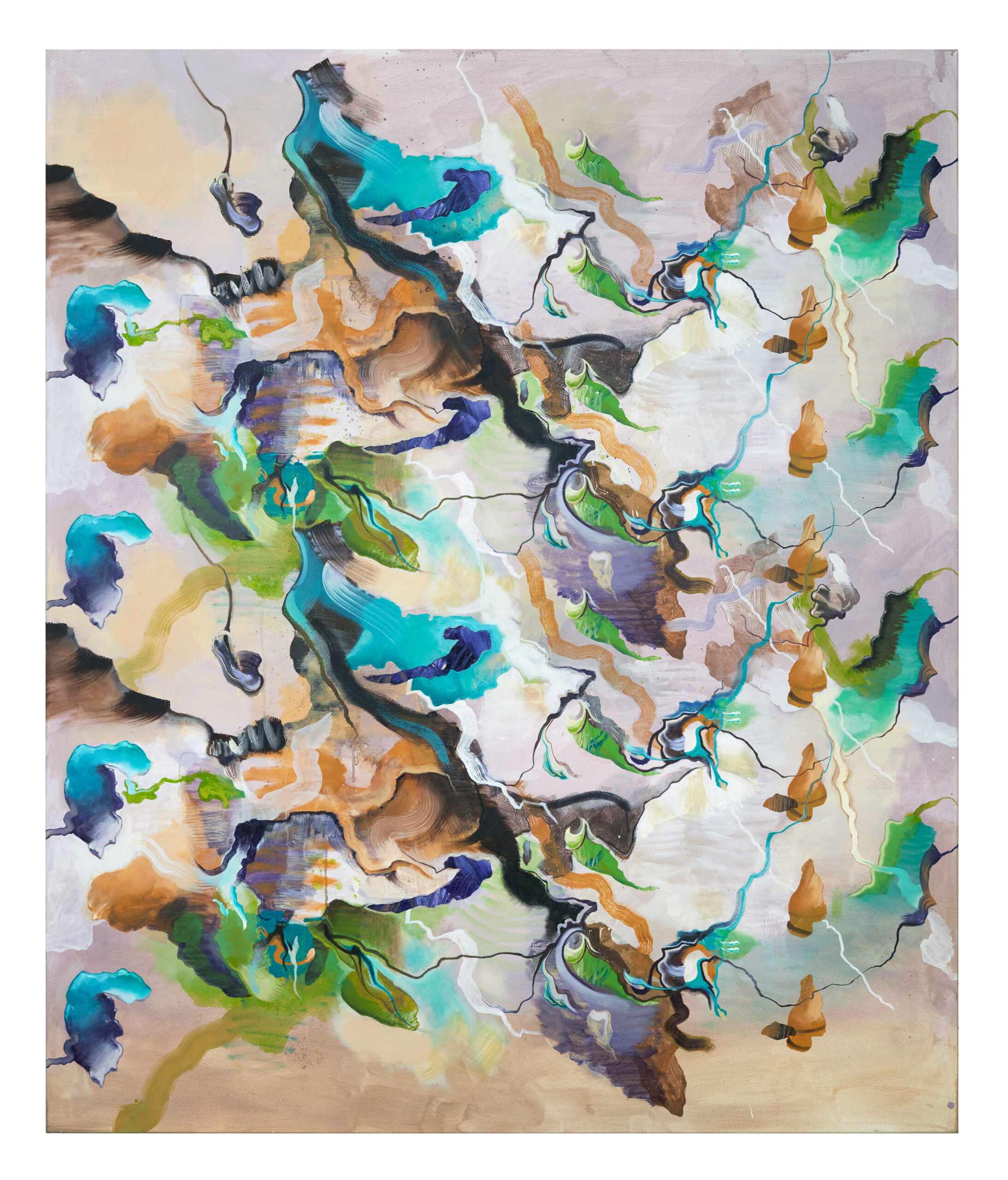
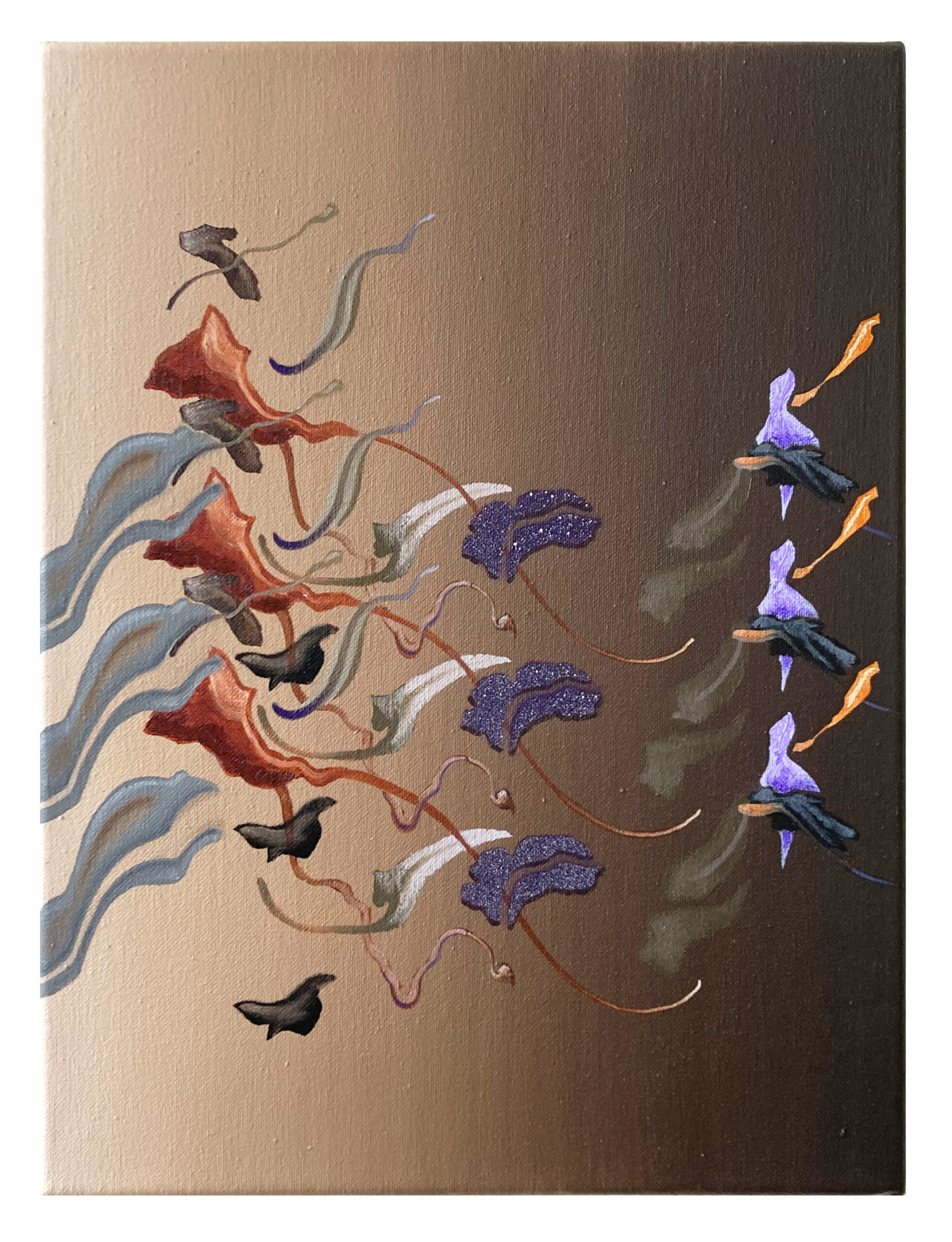
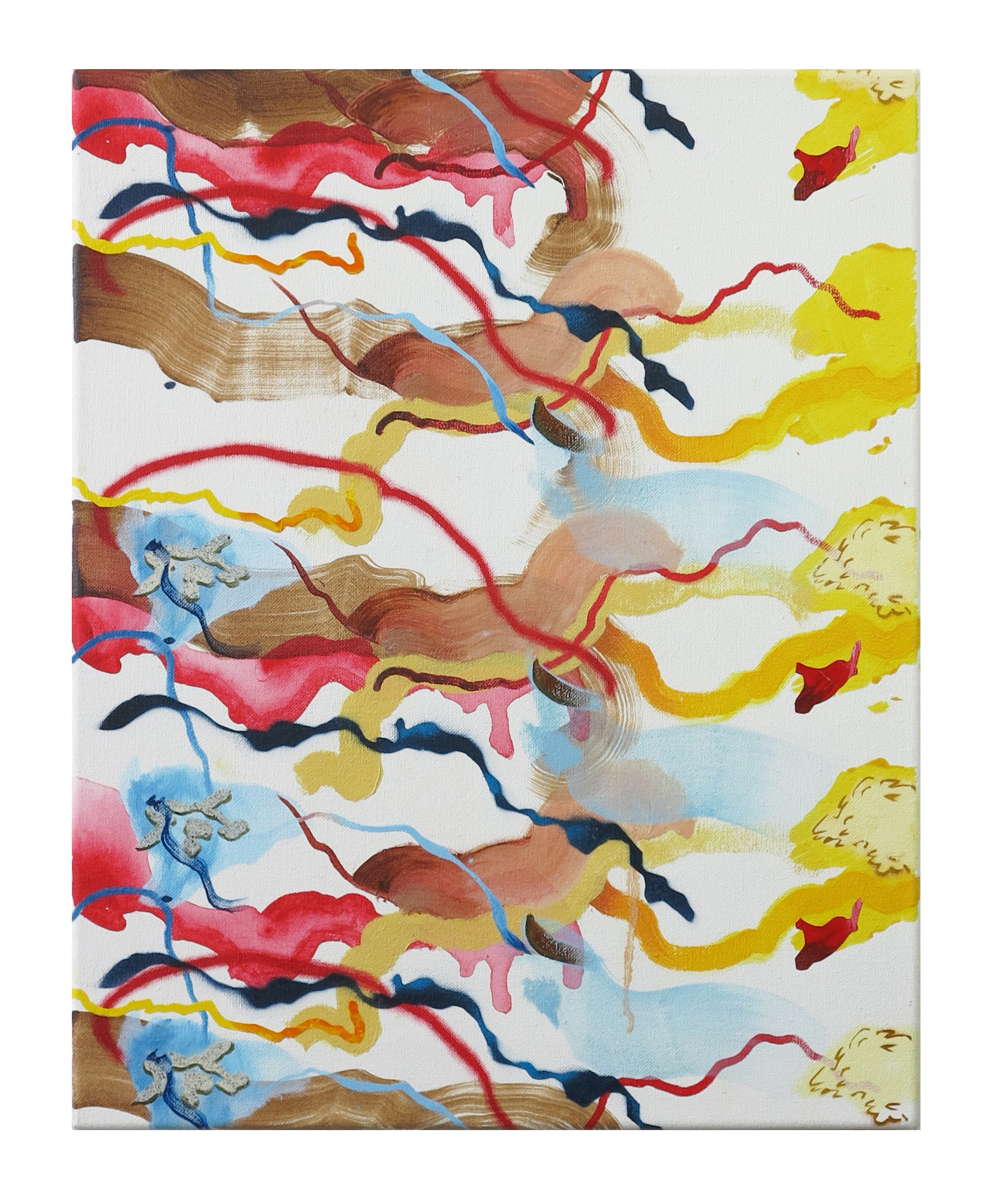
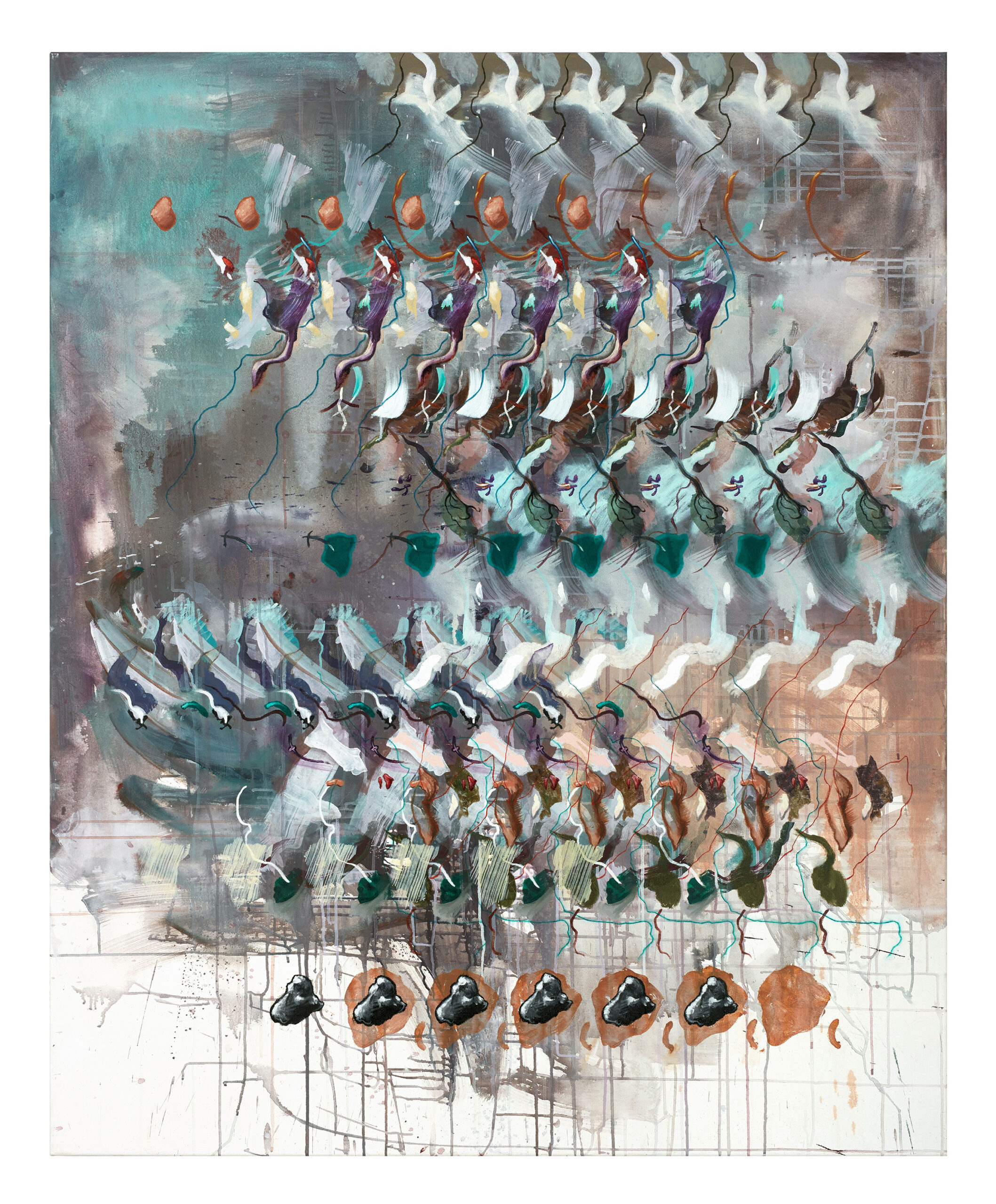
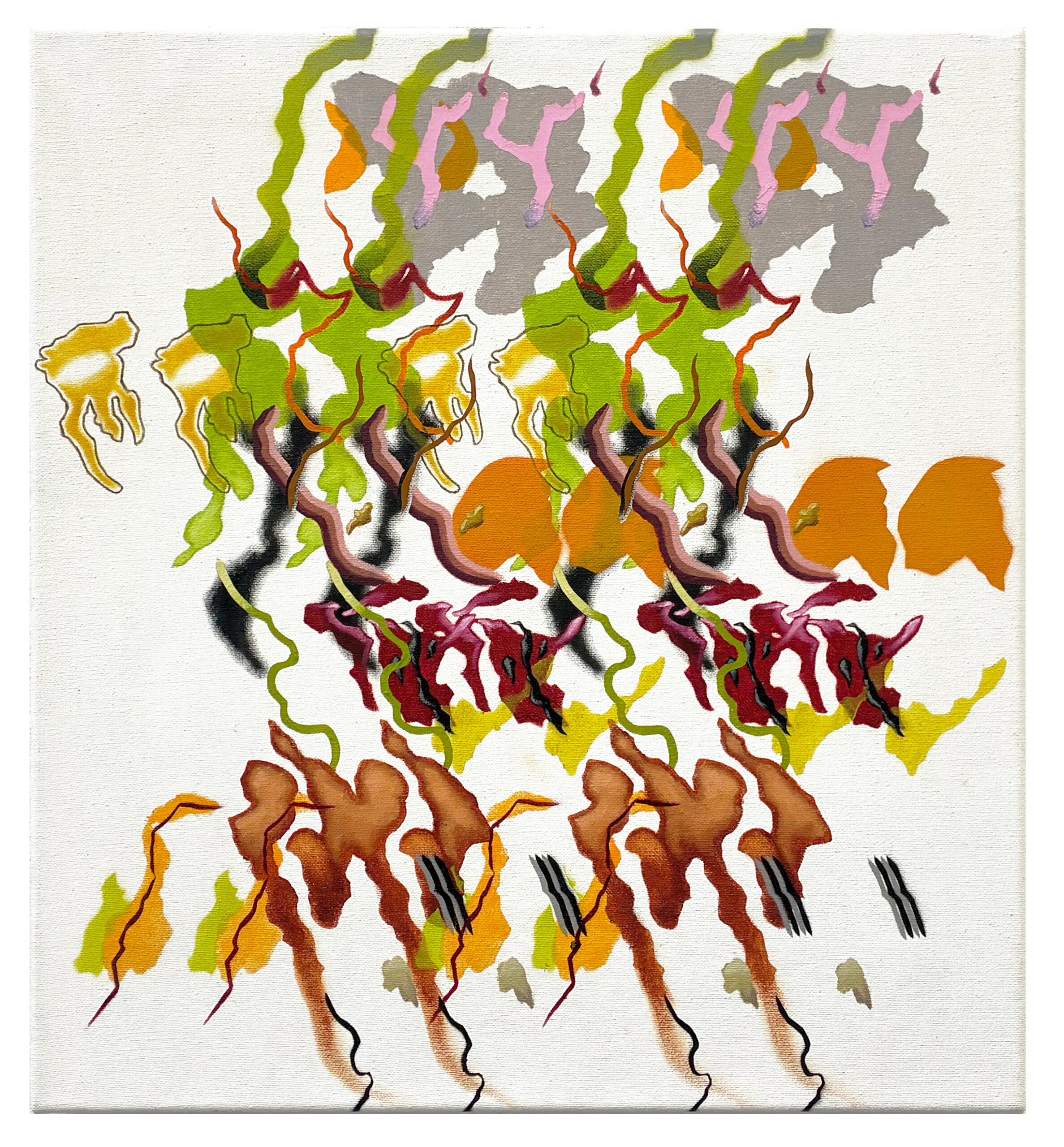
In Ted Green’s paintings, one senses both a control and continual improvisation that gives a musical effect. Color acts polyphonically, each hue entering as a separate voice. The paintings jam.
At first glance, their repeating patterns suggest systems approaching perfection, but a closer look reveals the minute variations of the hand. His refusal to let repetition harden into mechanical sameness and allow small inconsistencies to remain visible are clues of a human at work. Subtle deviations accumulate into syncopation, hesitation, and drift. A repeated shape behaves like a beat; a sudden interruption lands like an off-rhyme.
They also seem to refer to cognitive processing. The forms—part orchid, part flea, part drumstick, part weather event—hover between recognition and abstraction and mimic the tendency to search for systems and meaning. Meaning emerges through duration and recurrence rather than image alone. Green transforms pattern into an event unfolding in time, where improvisation appears not as spontaneity opposed to structure, but as variation generated from within it.