
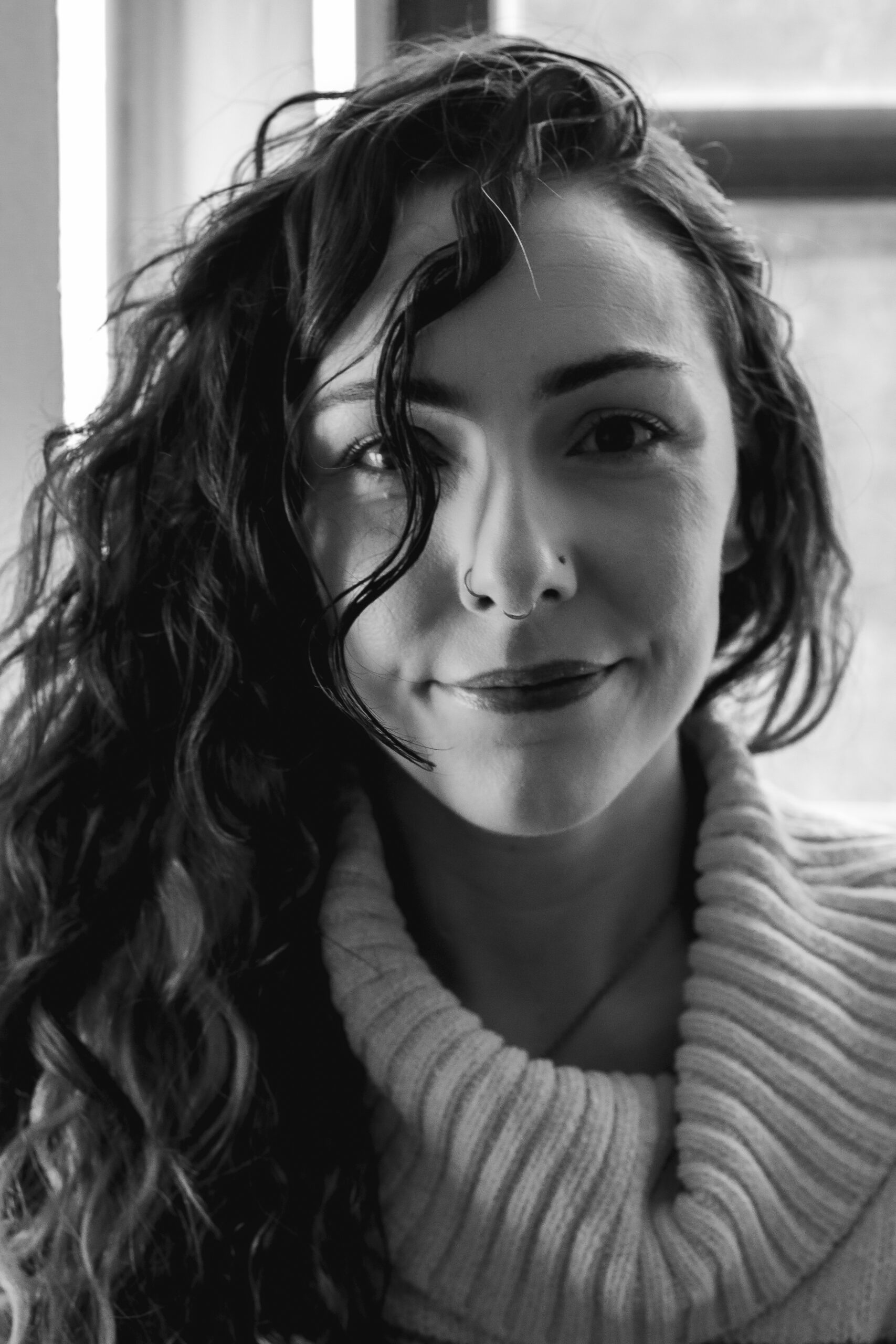
Every day, I take my prescriptions of multiple colorful pills. Every day, I do my grounding exercises. Every day, I work to breathe. What isn’t the ritual work of every day, though, is arriving at the blank page of my notebook to write, to make something poetic, to share with my fellow suffering associates of this dystopian living. By this, I mean those who can relate to this shared human experience and find some solace in it, community.
Community is conceptually interesting. It is furiously boosted to be essential to an individual. Not that this isn’t an honest assessment, but my concept of what community is most certainly has altered, or perhaps regressed, as life continues to give me suggestions to demonstrate otherwise.
Many pockets of people who identify in a particular way seem to have an overarching philosophy, a mindset, or a guide to adhere to or proclaim that satisfies the title of community. An example is the queer community’s acceptance of all who wish to live authentically in their sexual and gender identities. But a night in any queer bar will quickly let you know otherwise, with strict notions on specific labels, appearances, and even who is allowed in what safe spaces as fellow queers. Though a community may have an idealized standard, it doesn’t mean the accepted standard is even practiced, and that can, in fact, be twisted into something sicker, graduating into sinister.
I’ve been a part of several different communities in my life: a diet version of a doomsday cult, a Big 10 “sports” fan, a cog in SEO marketing mayhem, a kink club, and, prominently, a voice in poetry. Communities can be venomous, intimate, or affectionate—or, oftentimes, all three. Community has helped me escape the cruelties of a religion, got me through physical assaults, family deaths, and has given me a way to find utter bliss in every blink now. It is also a colossal part of why I nearly killed myself last year.
One day, with my overreliance on community as an entire entity and my own internal, unhealthy cycles, I vanished into iridescence. I lost my housing; I lost my health insurance; I lost a loved one; I lost more than one loved one, actually. Living out of a duffle on a friend’s couch, wearing the same crewneck sweater, unwashed hair and teeth, and socks for weeks. I had to look not just inside of myself to rebalance and recover, but also outside of myself to fully recuperate, plus there was that pit stop at the psych ward.
This time, as opposed to a former, more immature vestige of myself, I would approach this crisis of chaos distinctly differently, unknowingly resurrecting a soon-to-be refined ritual. This time, instead of excising unfiltered grief onto the blank page for outside consumption, I needed to experience physical, creative love. The following summer, I had scheduled a tour through the Midwestern book tour with a long-time poet friend, a friend who knew my struggles. On this tour, while there was time to explore for the creation of new work, mostly it was one of absolute perspective adjustment through poetry people. In each new city, Philadelphia, Columbus, Chicago, Indianapolis, Minneapolis, I met wordsmiths in brightly colored art galleries, cool coffee shops, dark cabarets, and back alley bars. Here, I was introduced to something unexpected: joyful support. I saw how we connected not only to each other’s writings, but also the spaces around us and the people in them. This led me to realize something else about a project I had been working on in the back of my mind; it wasn’t just a return to the page, but to the stage that was needed, and not just for myself, but for many of us.
After an unsuccessful application the previous year, Indianapolis-based poet Corey Ewing and I got into the 2024 IndyFringe Festival with our production, Verse & Vision. We wanted poetry to take prominence, with our ideology that poetry is everything. The delirium seemed simple, suitable: pair a poet with another kind of artist to create a collaborative performance, each set lasting anywhere from 5 – 20 minutes. Then, we’d assemble all of the paired sets to craft moments of not only multimedia but also emotion. Like most acts of experimentation, we wished to find new ways to better showcase the contours of our own lived truths. So, we began this effort. And with newfound knowledge and feeling from the tour, something happened. Replication was required.
That first summer, when this new community connected for tech rehearsal, we witnessed the completion of each poetic set by the previously arranged each pairing; what they had been working on over the months. What emerged, even though we did not coordinate it, was that all of our collective work touched on religious trauma and the gender perceptions within those constructs. Here we were, sitting in daylight in a blacked-out cabaret, gushing with misty-eyed hugs and snaps over not just each other’s work, but over the piano-infused howls, spotlit shibari, and puppets that prayed. In that warm season of Vision, on the boards, backstage, alone with our collaborators in a basement’s backroom, jamming out, we discovered a haven. It continued to be one for several of us who kept experiencing hardship in our border communities – a place to say what you have to say, according to Corey. We found ourselves in each other’s voices; it was the rhythm of something larger, something whole.
Now, this last August, Vision poets (because everything is poetry!) were back at IndyFringe for its 2025 run with some returning icons and some new phenoms. This year’s production, with its predominantly LGBTQIA+ cast, had an unspoken meditation on the identity of Midwestern queerness. Months earlier, we had a preview show at Indianapolis’ Chatterbox Jazz Club to a packed house of people we knew and loved and those off the block of Massachusetts Ave. And while the tiny tyrants will always be present, eagerly sitting in the front row, the electric love between hands-on craftmakers in motion still draws standing-room-only.
This abundant spirit made us want to share beyond the confines of the Republican Red State of Indiana and expand into other states, starting with my new hometown of New York City, to share this poetic touch of kinship. This summer, Vision began a micro-residency run at DADA, a Jazz performance space in Ridgewood, Queens. The show features folks who echo the urgency of profuse poetics rooted in a caring community. Even the venue owner, a dear MFA friend and daughter of war, is a human who appears to instinctively champion those who are left out, left behind, or left with little with a deep grace that can only be experienced to be understood; who understands the impossible need to find love in circumstance.
Vision’s mission has become clearer as I continue to steward its growth through not just my own montage of mental health, but that of this time in history. Vision is more than a gathering of living poetry: it’s a home where voices find room to deepen and grow stronger. We stand not as the first, nor the last, to push the edges of multimedia experimentation. Yet this project was born from a landscape scarred by harsh political storms, nurtured by fiercely compassionate souls unwilling to remain silent shadows. In that defiant spirit, we reached out—seeking connection with others who, like us, inhabit that same fierce space.
During this time of being tired of existing in unprecedented times, when rights, livelihoods, and even the lives of people we love are being lost, we must hold on to our work and each other to continue to resurrect ourselves through the best coping mechanism that can help ignite a larger movement: community in poetic collaboration.
What I have grown to grasp about community is that you must make your own, and to not arrive at the general admission gates of the group with expectations of devoted duty by them and yourself. You must be selective within a niche to create those pocketed points of support, inspiration, and ultimately, hopefully, love.
Kristine Esser Slentz authored EXHIBIT: an amended woman, depose (FlowerSong Press, 2021, 2024) and recently released face-to-faces (ThirtyWest Publishing House, 2026). A TEDx participant, organizer/producer (Adverse Abstraction and Verse & Vision), and regular contributor to The Saturday Evening Post, her work has also appeared or is forthcoming in TriQuarterly, Five Points, Tupelo Quarterly, and elsewhere.