
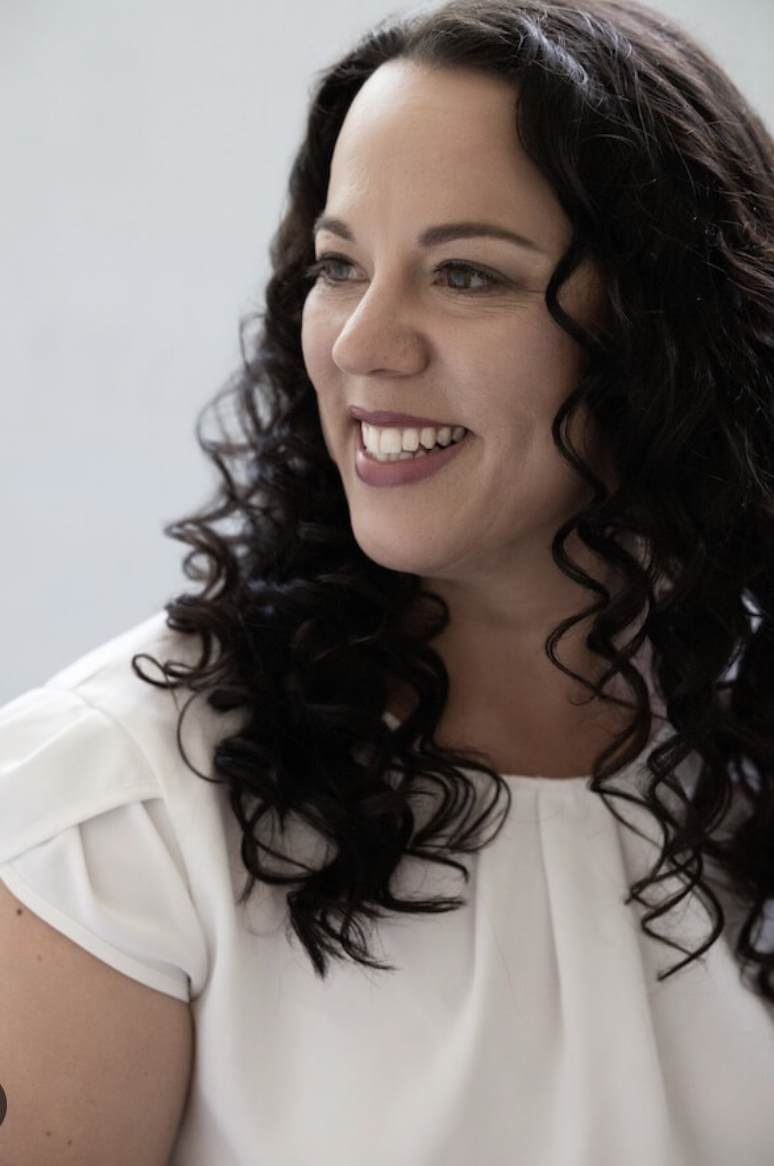
Nickie DeSardo is a poet and essayist whose work explores themes of identity, love, and social justice. Nickie is a Poet & Author Fellowship recipient at Martha’s Vineyard Institute of Creative Writing. Nickie’s recent poems appear in Moonstone Arts Center: Betrayed Anthology, Dipity Literary Magazine, The Word’s Faire, and Hairstreak Butterfly Review. Her journalistic work has been published in The Day. Her poems and articles reflect her experiences as a feminist, mother, and advocate for change. In all her work, Nickie blends artistry with purpose. Follow DeSardo on Instagram @ nickiedesardo. You can also sign up for her newsletter at Writing In the Margins | Nickie DeSardo | Substack.
KMD: Your work often interrogates cultural expectations of women while remaining deeply personal. How do you balance the individual story with broader social commentary?
I once thought silence was a demonstration of integrity. Later I realized that if I said nothing, people would create the story themselves. They often got it wrong.
I write poems and memoir to capture a feeling or experience before time reshapes it. I share that work because, sadly, these experiences aren’t isolated. I’m not the only woman navigating difficult relationships, family court, self-doubt, and the long work of reclaiming identity.
I don’t really separate the individual story from the broader social commentary. The individual story is the broader social commentary. It offers the perspective of someone living inside these experiences rather than observing them from a distance.
One of the stories I found myself questioning was the idea that hope is always a virtue. Hope kept me in situations I should have left. It convinced me that if I just gave more, loved better, or endured longer, things would change. I think many women are taught that perseverance is love and sacrifice is strength. Letting go of that version of hope wasn’t giving up, it was my first courageous step toward freedom.
When future generations look back on women of our time, I don’t want them to have to guess what our lives were like. I want there to be firsthand accounts.
KMD: My Body Isn’t a Protest presents the body as both victim and betrayer, complicating common narratives about resilience. How did that central metaphor develop?
An old professor gave me a prompt to write a poem in which my body was a protest. All I could think of was that my body wasn’t protesting anything. Instead, it felt like a betrayal. I couldn’t stop thinking about all the ways my body had betrayed me, especially as someone living with trauma and chronic illness. Then I turned to all the ways I had betrayed my body: by pushing it, ignoring it, and failing to protect it.
I realized I held both anger and compassion for my body. I was angry that it hadn’t protected me. Angry at it for causing me pain, for feeling anything at all, for not working, for being different, for making everything so much harder. But I also recognized that my body had survived things it never should have had to survive. It was both victim and betrayer, just as I was both victim and betrayer.
As I wrote, betrayal was flowing in every direction—my body toward me, me toward my body, and other people toward me. Healing required me to honestly examine the ways I had abandoned myself while also recognizing the burdens that were never mine to carry. Healing wasn’t about choosing one truth over another. It was about making room for all of them.
KMD: In Star Witness, photography becomes both evidence and deception. What interests you about the relationship between memory, documentation, and credibility?
My experience was that people often believe the first person who tells the story. That person often controls the narrative. We also tend to see what we want to see, or what we’re most comfortable believing. For a long time, I helped reinforce that story. I pretended everything was okay. I posted smiling pictures and celebrated moments on social media because that’s what I wanted to believe for myself.
When I eventually started sharing other parts of the story, I realized how difficult it can be for people to let go of the picture they’ve already accepted. That’s what interested me as I wrote Star Witness. A photograph can be both evidence and deception because it only captures one moment. You can look at a family smiling at Disney World and believe you’ve seen the truth, without ever asking what’s behind the picture. The photograph depends on who’s holding the camera and what they choose to include.What happened in the moments before and after the picture was taken?
KMD: Court Stance compresses an enormous emotional and legal experience into a remarkably restrained prose poem. What role does compression play in your writing process?
Sometimes much is said with very little. When I close my eyes, I can still place myself on that witness stand, in that exact moment. I wanted to take the reader there and to put them on the stand with me.
I don’t think of it so much as compression as intentional selection. That single scene carries the weight of the entire trial: the injustice, the terror, the scrutiny, and the feeling of having your truth questioned. Rather than recount every legal detail, I wanted to trust that one moment could hold the emotional truth of everything that surrounded it.
I think that’s what poetry asks us to do. To choose the image or moment that contains something much larger than itself.
KMD: What else are you working on? What else can readers look forward to?
I’m currently seeking a publisher for my first full-length collection, Hope Is Not, from which these poems are drawn. The collection explores our complicated relationship with hope, asking whether hope can sometimes keep us tethered to lives we’ve already outgrown. Rather than presenting healing as a linear journey, the poems move through cycles of hope, despair, grief, love, and renewal. I’m also continuing to write poetry and memoir that explore these same questions from different angles.
A Folio of Poetry by Nickie DeSardo
My Body Isn’t a Protest
It’s a betrayal.
I’ve been trapped in here for years,
buried inside a harp seal,
wide-eyed with hakapiks overhead.
larynx was silent when I wanted to scream.
hands froze when I wanted to fight.
feet stayed when I should have fled.
My body isn’t a protest.
It’s a betrayal.
It’s a betrayal.
Even my body knows,
marks its own cells as intruders,
attacks itself,
as if the outside world wasn’t enough.
It joins the conquest,
and forms an internal massacre.
Hand me the club.
I’ll do it myself.
Court Stance — A Memoir
I sit enclosed in polished pine. The judge sours beside me. Case after case, black robe against white skin. He rapid-fires questions designed to make me stumble. Do you believe a child deserves both a mother and a father? Why don’t you have a bigger job? Why didn’t you ever call the police? He flips the blame to me. An order is made after five minutes of one-word answers. He doesn’t permit more. No patience for the whole story. He wants to cross my name off the docket. The bench rests. There is no protesting, no explaining. Unshielded, legally disrobed, on display. I must be silent, with no signs of emotion. I wouldn’t want to confirm what he already believes; that I’m irrational and erratic. I contain my pleas for help, my fear, my outcries but am warm enough not to appear rigid.
Men make the rules.
Star Witness
Slip on your Stepford mask
post on Facebook,
perfect lines on perfect skin,
headshots only.
You’d never include a still frame
of bruised wrists or broken hearts.
It’s hard to develop a black and white of a slow boil.
You’ve spent hours in the dark room.
Sepia, a better choice perhaps,
an old-timey look with feathered hats and velvet.
We always made pretend anyway.
I am the star witness,
the first account among the facades.
Time gave me courage to tell the truth, but not the credibility.
The lies are easier to believe.
Who is left,
to piece together the negatives,
to hold an album in their hands?
You gave them all the lens,
the Canon,
the photo paper.
I watched,
am still waiting for the images to rise.
My words are extinct,
my voice thin,
I hold no power.
People believe the storyteller,
but not the star witness.
Megaphone Mouth
if Shel Silverstein were a woman
he’d write a poem about Molly with the Megaphone Mouth
where each time she was told she was making a big deal out of nothing
or claimed something was actually her idea
her tongue would grow in the lab like a new ear on a mouse’s back
overlooked and discounted, it’d send a jolt to her jawline
stretch that blow horn
over her lips like clay plates in the Mursi tribe
microaggressions would show up as aggressions
loud and heavy
evident and real.
but who would hear?
if Shel Silverstein were a woman
he’d write a poem about Molly’s cautionary tale
it would be silly
and rhyme
and children would read it on the circle rug during their morning meeting
they would do this before anything else
and the boys would laugh
but the girls would roll their eyes
at how absurd a poem could be
about an angry woman
with a megaphone mouth
Kinda Woman
I’m a wake up and lift the blinds kinda woman,
a make the bed before I’m out of it kinda woman,
a finished five tasks before you even get started kinda woman,
a move over I’ll do it myself kinda woman.
You’re a make pyramids out of empty cans kinda guy,
a save it up till the last minute kinda guy,
an hours of research on a truck you’ll never buy kinda guy,
a spontaneous, pull the trigger, let’s see how it goes kinda guy.
I’m a take me to the water kinda woman,
a give me space, but don’t leave kinda woman,
a clear my head with your voice, kinda woman,
a take charge of me, fist full of my curls kinda woman.
You’re a spend all day on the couch with the dogs kinda guy,
a gotta listen to music while you’re cooking kinda guy,
a flip the omelet with one hand kinda guy,
an I don’t know, let’s find out kinda guy.
I’m the chaos, you’re the order.
Or is it the other way around?
I’d get it done but there’d be no place to put it.
I organize my life with post-Its and planners,
But where would I go without you?
Maybe you’re the planner after all —
the dreamer, the believer, the faithful one.
Maybe I’m just a mound of raw edges,
like the leftover yarn from 1,000 intended sweaters.
There’s something. There’s something there worth a damn—
Right? I’m a damn kinda woman,
a plain materials, set to be something kinda woman.
Gonna take more than Post-its notes to make sense
of all that’s swimming around in my head,
doing laps. The front crawl. The butterfly.
Make sense of it.
You’re my translator.
Tame my thoughts like you tame my curls.
Keep being my turn it into something kinda guy,
So I can be an I surrender kinda woman.
Painted Love
I thought I needed a bold kind of love,
a van Gogh kind of love,
a reds and yellows and royal blues kind of love,
all rhythm and movement,
a medley of thick lines.
But your love seeped in like watercolor,
smooth, sweet strokes,
blended edges,
it was quiet and soft,
a wash of lilac, muted grays, rose and pale yellows
I could hold your love in my hands
gold against gray
lightning in clay
You told me I was Kintsugi
Broken and mended—art
But you are the custodian
in the gallery after dark
you sweep the pieces
of broken tea bowls and
seal them back together
rejoin the edges
you are the artist
you are the painter
you are the creative master
You are my gold.