
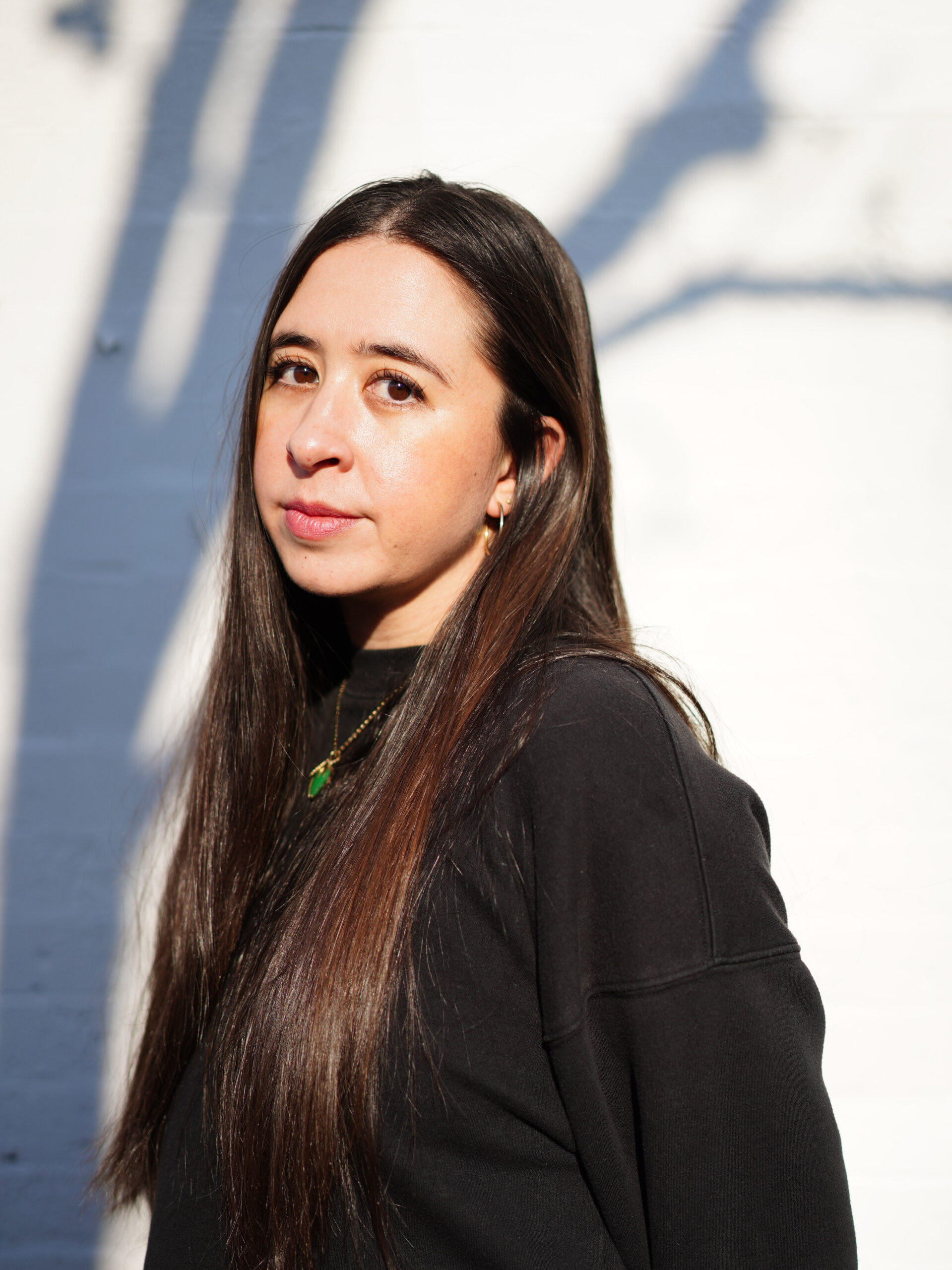
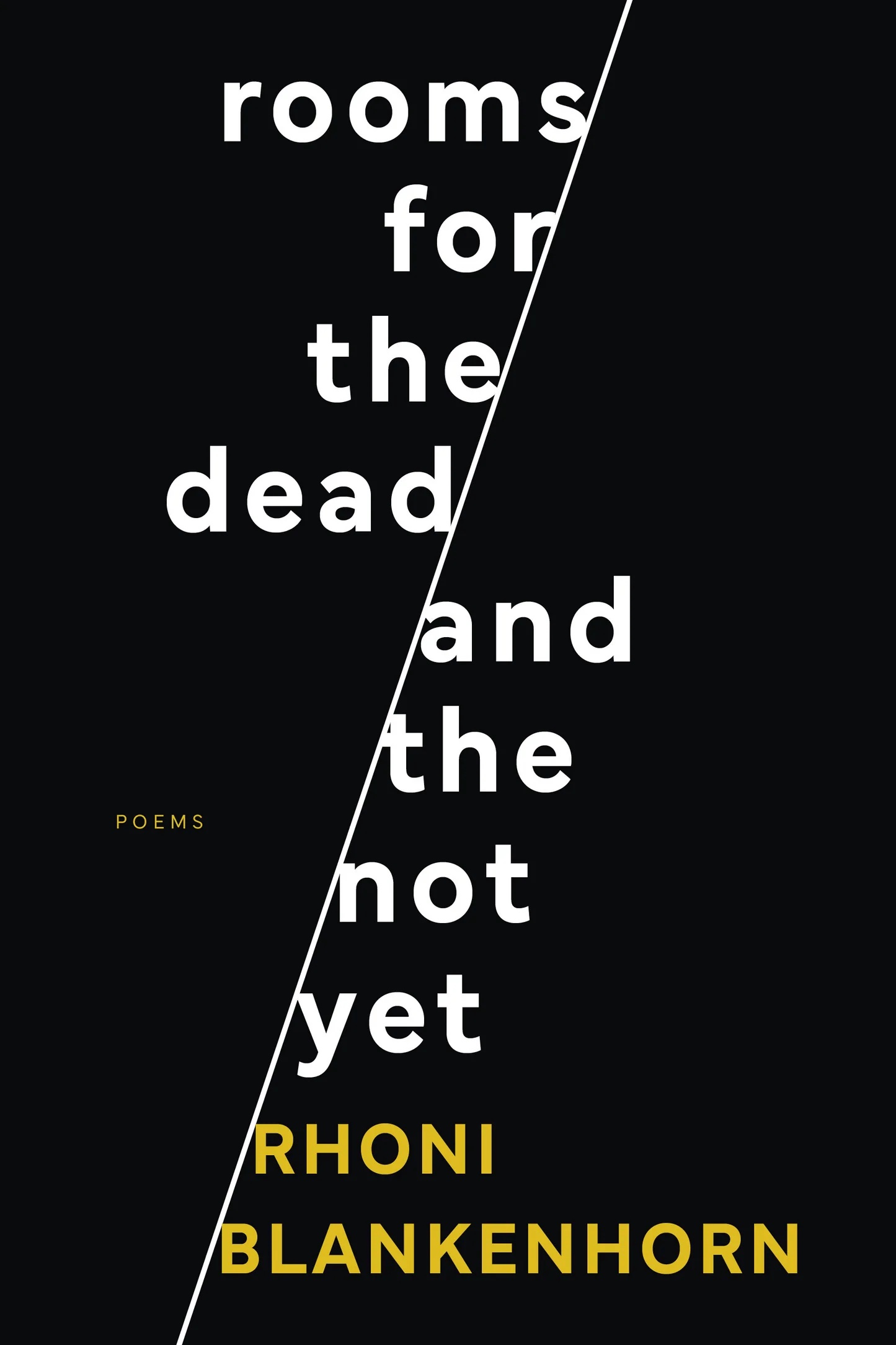
Tiffany Troy: How does the opening poem, “Gate” introduce readers to the poems that are to follow in Room for the Dead and the Not Yet?
Rhoni Blankenhorn: This collection investigates relationships between living and the dead, the good and the bad, interior landscape vs. exterior landscapes, the countries I call home, and love amongst family, friends, and lovers. I was brought up to believe there are dichotomies, but now I believe that the places where edges meet are opportunities for curiosity. I’m interested in how and when borders are created, as well as how and when they are permeable. These are emotional, political, historical, and personal interests.
I wrote “Gate” while in Kingston, New York at a friend’s house. I had been walking in the garden, which at the time had a fence that was more symbolic than substantial. Many of my poems come from observations like this, mundane details that expand into metaphor.
TT: As someone lucky enough to see some of the poems in the collection in their earlier forms, I am curious: what was your process in writing the poems and putting them together?
RB: These poems emerged over a five year period after my dad’s death, during which I applied for and completed my MFA. I didn’t set out to develop a collection, but as the poems accumulated, I began to notice threads of themes and images that connected them. For example, I had no idea how frequently dogs appear in my poems until I laid the pages out, which makes sense considering how frequently I dream about my childhood dog.
I also edit extensively. Actually, I have a hard time feeling that anything I’ve written is finished. I usually start a poem from the kernel of a feeling, and try to keep it living from there. I often find the real poem in the editing process.
TT: Turning to the overall structure of the collection, I note that there aren’t sections per se but opening with “Gate” and ending with “Mountain.” If “Gate” is the portal into the collection, what is “Mountain” for you?
RB: “Mountain,” while it is a closing poem, offers an opening, and the feeling of hope. It’s the acceptance of smallness in nature and the universe, the indifference of the passage of time, and how humbling it is that life continues. I wanted to end the book looking outwards, beyond myself, and beyond a human-centric experience.
I wrote “Mountain” and several other poems in this collection while hiking in the Sonoran desert, an ecosystem so resilient and resourceful that its abundance isn’t always evident; life hibernates and renews, and after it rains, greenery bursts forth with obscene fervor. I think of how surrealist artists turned to the desert as the landscape to represent the unconscious mind. I think I do as well. I feel somehow cleaner in the vastness, and turn to the desert as a place for imagination.
TT: I am curious about the poetics of haunting as it takes shape in your collection, which moves through grief as well as remembrance. Who are some poets who are instrumental to your formulation as a poet within this collection?
RB: There are so many poets whose work supported me throughout writing this book. Mei-mei Berssenbrugge, Rick Barot, Paisley Rekdal, Eugenia Leigh, Marie Howe, Timothy Donnelly, and Jeffrey McDaniel to name a few.
TT: Speaking for a second to poetic form, what comes first for you, the content or the form?
RB: Content is usually first for me. I start from a small idea or note. I pay attention to the way the light hits, or the sound of someone’s voice when they say something tender. I look for what sparks feeling, then I follow the feeling until I can find a form that supports the content best.
Sometimes I’ll turn to form as a starting point when I want to stretch myself, and I use it often when editing a poem whose shape eludes me. The constraint can help me find direction when the poem is feeling cluttered, or not quite there yet.
TT: Your poems have this delicious sense of humor, as in “SPAM,” where you write “tells the painting in all caps and yellow against deep blue” while at the same time being deeply engaged in art. What is humor to you and how does it interact with visual arts or other disciplines?
RB: I find comedy in the everyday, it makes me feel more alive. I look for humor in writing, art, food, friends, everything. I’ve learned that one can hold so many feelings at the same time, and that grief and love and comedy can certainly live side by side. Comedy and humor have the ability to disarm people, and prepare them to feel, which can be helpful when writing about emotionally weighty or challenging topics.
Spam is a funny and strange thing. I didn’t like eating it as a kid, but now I’ll indulge sometimes. Spam points to a history of violence, American imperialism, war, consumerism. Spam is one of many leftovers from American occupation in the Philippines, in addition to the military system, the education system, and the English language. In the Ed Ruscha painting I was looking at while writing this poem, a can of spam rockets through a sparse composition with an almost bodily humor, leaving a spray behind it. Comedic, consumerist, and violent all in one.
TT: If you have any writerly advice to your younger self, what would it be?
RB: Write into the weird thoughts, and being vulnerable is an opening.
TT: What are you working on today?
RB: I have a collection of poems about chairs I’m revisiting that speak to presence, absence, and labor. I’d like to build at least one chair.
TT: Do you have any closing thoughts to your readers of the world?
RB: Your readership is a gift, thank you!
Rhoni Blankenhorn’s poems have appeared in The Los Angeles Review of Books, The Slowdown, Asian American Writers’ Workshop’s The Margins, and elsewhere. Her work has received support from Bread Loaf Writers’ Conference, Constance Saltonstall Foundation for the Arts, Sewanee Writers’ Conference, and Storyknife Writers retreat. Rhoni’s debut, Rooms for Dead and the Not Yet, won the Trio Award, and was published by Trio House Press last summer. She performs her poetry regularly (U.S., France, U.K., hopefully the Philippines soon), and will be participating in Filbookfest in the Bay Area, CA later this year.
Tiffany Troy is the author of Dominus (BlazeVOX [books]). She translated Catalina Vergara’s diamonds & rust (Toad Press International Chapbook Series). She is Managing Editor at Tupelo Quarterly, Associate Editor of Tupelo Press, Book Review Co-Editor at The Los Angeles Review, and Co-Editor of Matter. In 2025-2026, she is a Co-Curator in Residence at the MinEastry of Postcollapse Art and Culture. In that role, she co-curates The American Wing, which features poets who shape the rich, polyglot and ever-evolving landscape of American poetry.