
For the last many years—& with great intention in the last few seasons—I’ve been fortunate to be in collaboration with the photographer, Kristin V. Rehder. Rehder is a writer as well as a maker of images, & regards both texts with a reverence & awe that makes collaboration easy, edifying, & sweet. Thrilling, too. We came to know one another—& the dozens of ways our individual stories touch, overlap, & intertwine—through ekphrasis. Nearly ten years ago, I took my poetry students to see a documentary exhibition of Rehder’s photographs at the Phillips Museum of Art in Lancaster, PA featuring locally resettled refugees & their stories.
From there a rapport developed that deepened into working relationship, friendship, & then kin. We are decades apart in age, but our experiences of gender, sexuality, region, & disease are braided in ways we continue to discover. This surprisingly personal, artistic, & deeply queer collaboration of heart & art is one of the most precious relationships I’ve had in my adult life. To collaborate with Rehder ekphrastically is both an artistic dream & an expansion of our trust in one another as people.
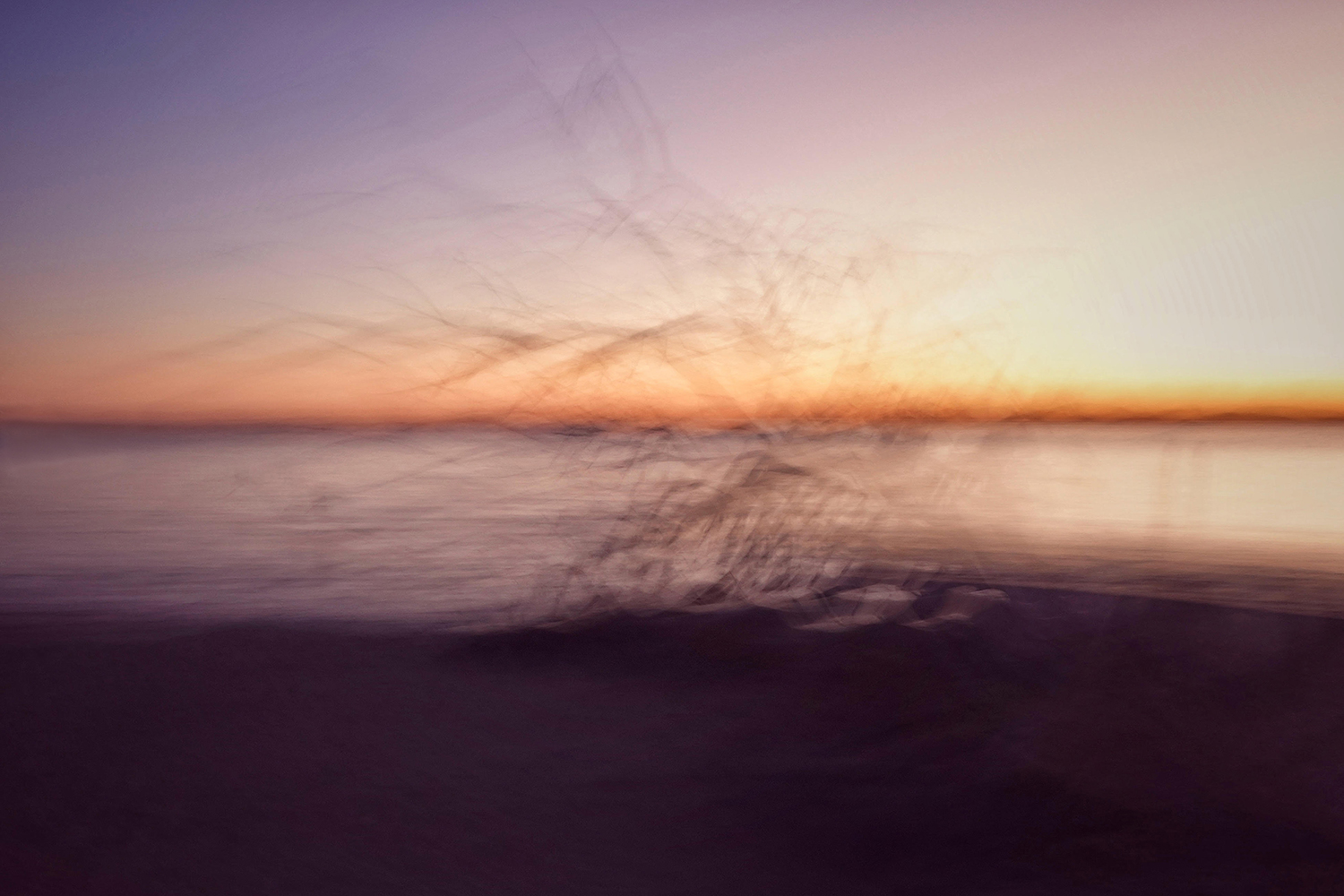
The poems in this folio are in response to a selection of images from Rehder’s expanding project following her diagnosis with Parkinson’s Disease. The photographs from TREMOR: Reflections on the Nature of Parkinson’s are made in a variety of locations & use the connection between her body’s physical tremors & the motions of the natural world to create images both moving & full of movement.
The poems I’ve made try to meet Rehder in register & tenor. I’ve been calling them associative ekphrastics, in part because I approach them in a way I’ve never approached poems: without a concrete idea in mind. Rehder offered me free rein—did not pressure the work to adhere to her prompts or processes—& so I followed my nose: I didn’t ask myself to explain why I was going where I was headed, or what business I had exploring certain voices. I trusted what came intuitively & let its complications reveal themselves to me; I don’t really ever do that. When I was making these poems, it felt like high-wire acrobatics & Rehder—or her images—were there as a spotter, as a net, as a coach. Giving control over to the associative power of the photographs has been incredibly freeing & healing. I’ve learned so much about myself as a maker & what generosity I’m capable of lending both myself & the perspectives I occupy.
The poems do not, however, tend directly the issues that motivated Rehder’s process. While the texts I’ve made continue to reveal cross-over between us—both subtle & obvious—I felt frequently aware that the series of poems I was drafting might not resonate with Rehder or her personal impression of the images she’d made. Hers are photographs that engage, in my estimation, the vulnerable & potent asset of one Parkinson’s symptom—a tremor—& further transform it into creative constraint. What was at stake projecting a narrow personal scope of my own—or a more metaphoric narrative less lucid to those unfamiliar with reading poetry—onto this critically individual photography?
One way I negotiated this as a collaborator was to engage form through my own disability. I tried using Rehder’s photographs as a kind of “soundtrack,” which my students are always drafting to help them make poems or respond to poems they are analyzing for class. Immersing myself in the larger body of Rehder’s work (& the TREMOR series in particular, which is expansive beyond the images we chose together), the geographies & movement of those pastorals became a sort of ambient sensitivity—a new, specific, blue room of the mind—where Rehder & I become collaborators across sensory investigation. It is true that I already understand the music of Rehder’s photographs to be in their movement. I wonder if she understands the way they are perfectly suited for the Deaf eye?
In the museum show that eventually welcomes this exhibition, I expect there will be twelve of Rehder’s photographs & twelve accompanying ekphrastic poems. The poems are written in two series of six: half the work is from one perspective (which you see here) & take the form of two 8-line stanzas for a total of 16 lines each. They all hold titles that indicate “tense” of some kind.
The other half of the series is written from another perspective & run long on the page, in couplets. Their titles are far more relational & lyric, their topics engaging intimacy of a different kind.
One challenge I wrestled with during this collaboration was accommodating photography’s mode of distribution: the gallery. How to make sure the two series of poems were intertwined & informing one another—bettering one another’s reading—but were not bound to a specific order? As anyone who has worked in museums can confirm, control over a live audience—a viewer, a reader—is even less reliable than the capricious flipping-through of the top-to-bottom, left-to-right expectations in a poetry book. Instead, any poetic narrative must be made exactly loose enough to be flexibly read as one would move about a gallery: at will.
This collaboration is still very much in progress, in part because our relationship continues as both artists & comrades, thinkers & bodies (& bodies under slow attack). As a poet, my experience of ekphrastic response to a living artist is very limited; I’ve definitely never collaborated in this way. As queer poets & Deaf poets living under ongoing violence against & legislation of bodies, I think we sometimes become comfortable with the idea that artistic elders are too rare to hope for. I am grateful for this time working with Rehder; it has been revolutionizing in so many ways.
– Meg Day, 2026
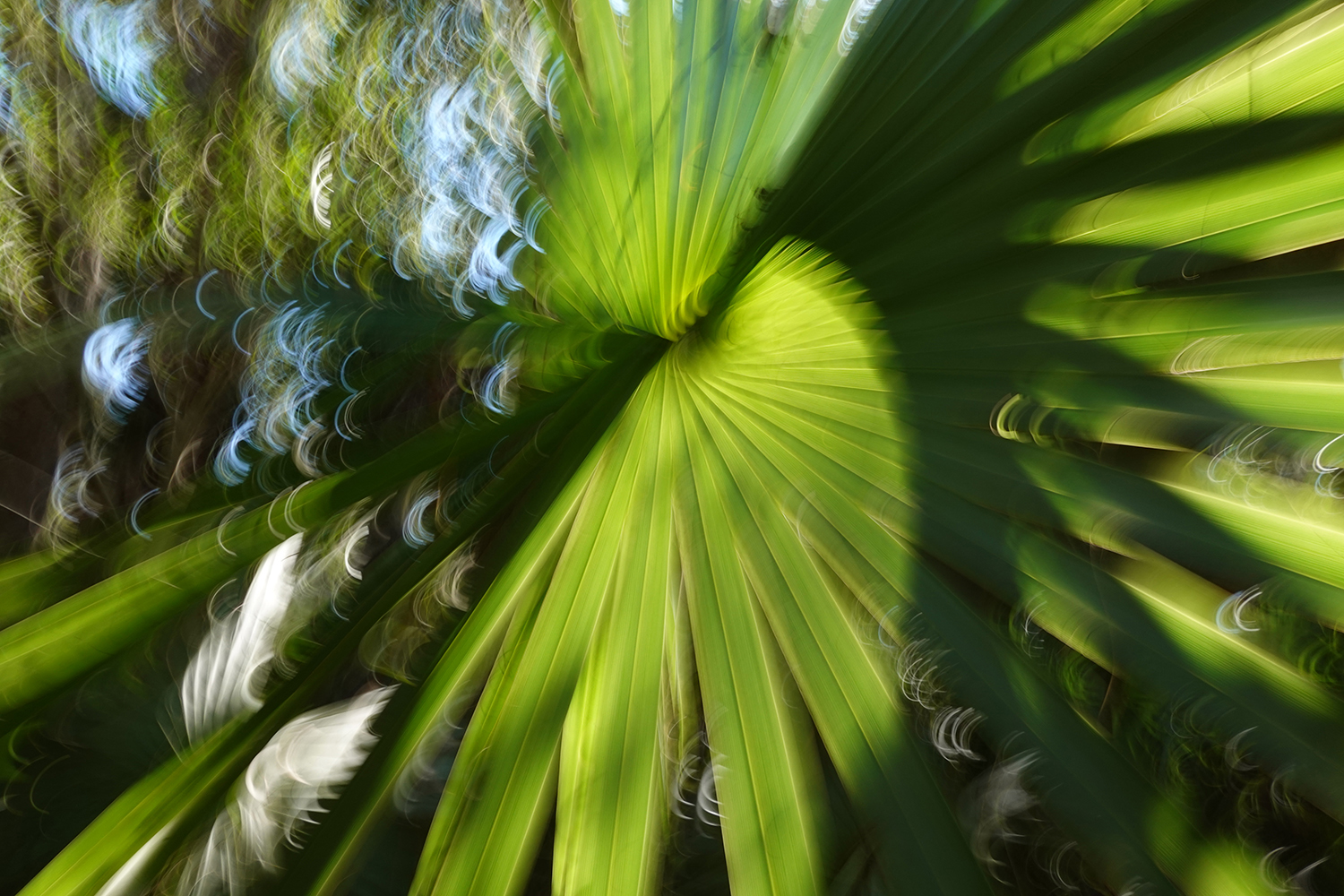
Present Tense, Expanding
On the mainland, I could not have imagined myself
so vibrant with life. Every bush along the rural road flushed
& retched, blooms spewing in waves moved by the new moon
of you. Every morning my knees met black sand & neon
leaf litter, baptized fire ants by accident. Invasive, all of us.
On the island, I knew the sun by a different name & went
by one, too: haole. A sound as much as a color. Rare
I feel that alive these days, or so easily recognizable. You call
sometimes & the room is lit by the flashing underbelly
of a zebra dove through the palm fronds, my ears closed
around the myna’s mundane jingle, your tiny fingers gripping
my thumb. The radio-phone above the Red Road delivered
news: my grandmother, shaped by cutting cane in exchange
for safe passage on the Beta, departed the world as curved
as she came into it. The night you were born—a lunar
eclipse at low tide—was the first time I’d ever dialed out.
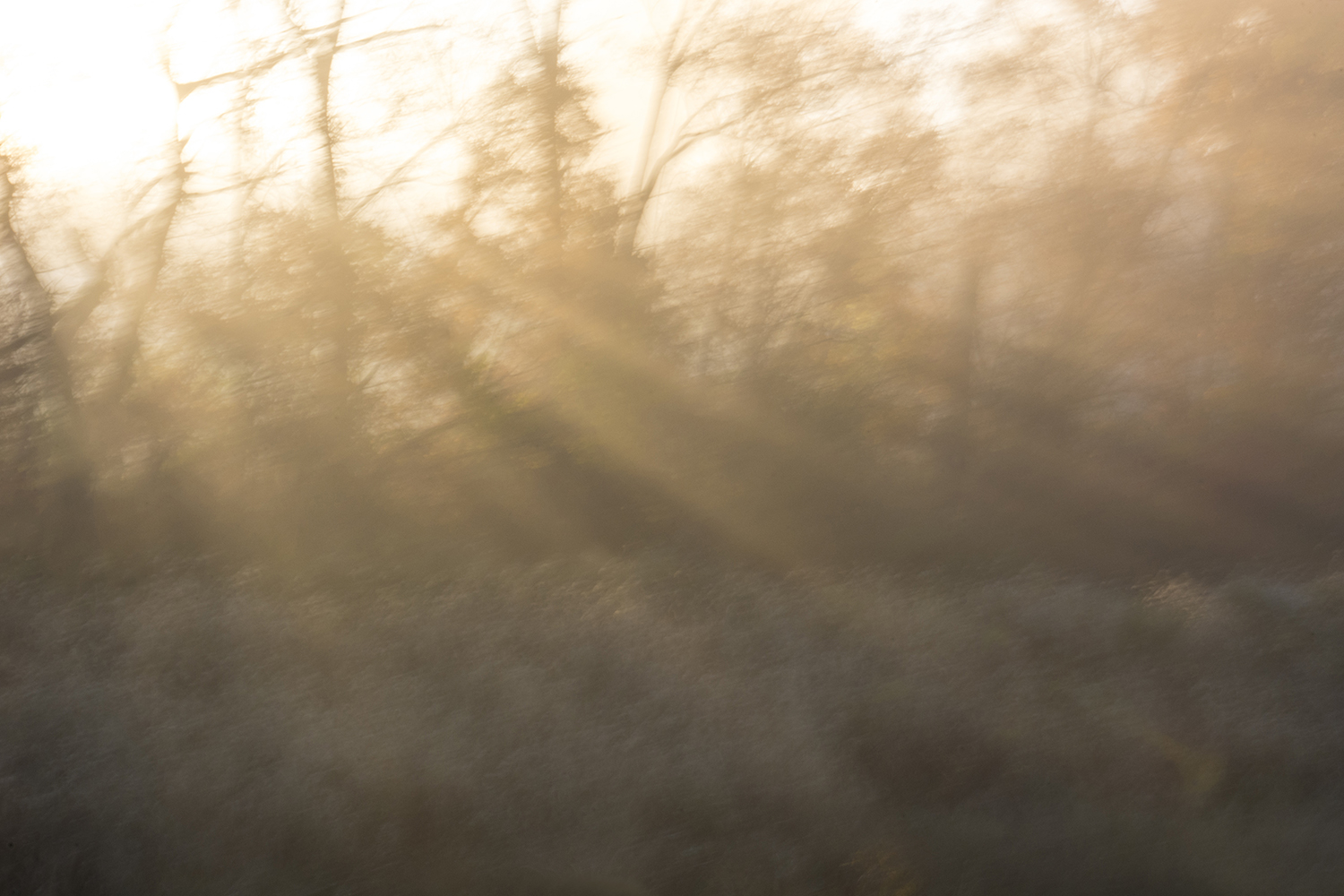
Present Tense, Filtered
On our honeymoon, we slept in the bare bed of your uncle’s truck
parked beneath the sequoias, then backpacked for days out to a bluff
we trained each other to love. Not hikers, but self-professed free
spirits blistering at both ends. I was homesick already for the woman
he thought I’d become. It wasn’t that I wanted otherwise. I tried,
I think, to leave the rest behind me—but what was left to weave?
Coconut frond, pine straw, & my coveting, already, a different base
camp. This must be why you chose poetry. Metaphor is a kind diversion
from the wound meaning can make, an accomplice who will never
give you up. I remember the early light through the amber skin
of the tent, your father & I curled together in a candled egg
before becoming balut. You were not a dream, but a consequence
of comparable reverie. In another life, it’s the tent that went
up in flames, its heat prying open the soft shell of old growth
cones: giants in every egg. I don’t know why my desires were so
unforgivable. All I ever wanted for any of us was better.
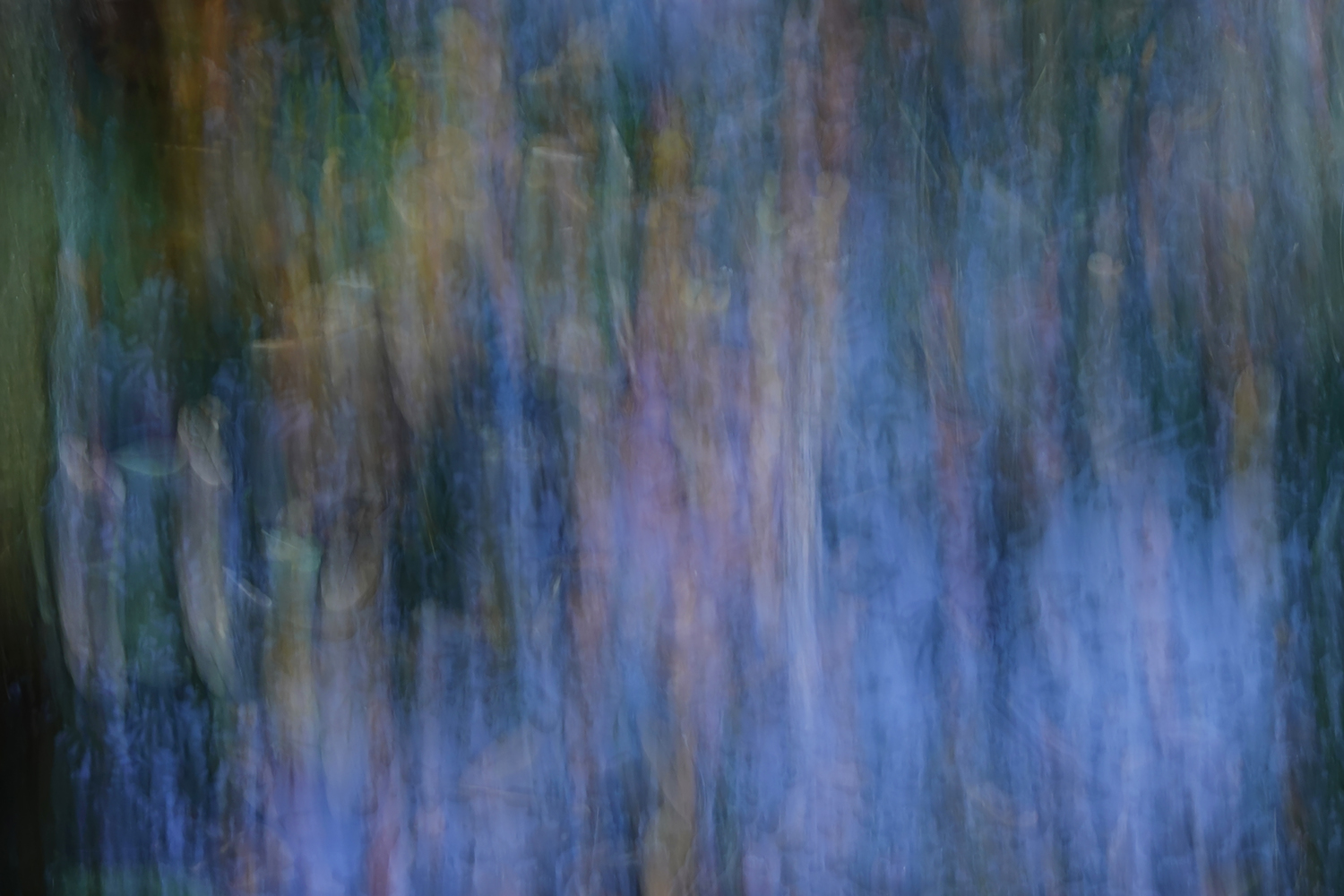
Tense, Inverted
I don’t remember the first time I saw the horses
with you. Saying it plainly didn’t always come easy, so
mostly we didn’t speak of things like that. You needed help
learning to ride what reared. Silence in our home
my only inheritance. To be loved in hush. Restraining
any animal is a challenge, especially if it’s of you. I wanted
to help you, I did. Nothing could have felt more freeing
than not knowing. What I knew of horses could kill you. Sooner
than not. Knowing what I knew of horses could kill you sooner.
To help you, I did nothing. Could have felt more. Freeing
any animal is a challenge, especially if it’s of you. I wanted
my only inheritance to be love. Din, hush—restraining,
learning to ride. What reared silence in our home?
Mostly we didn’t speak of things—like that you needed help.
With you, saying it plainly didn’t always come easy, so:
I don’t remember the first time I saw my horses.
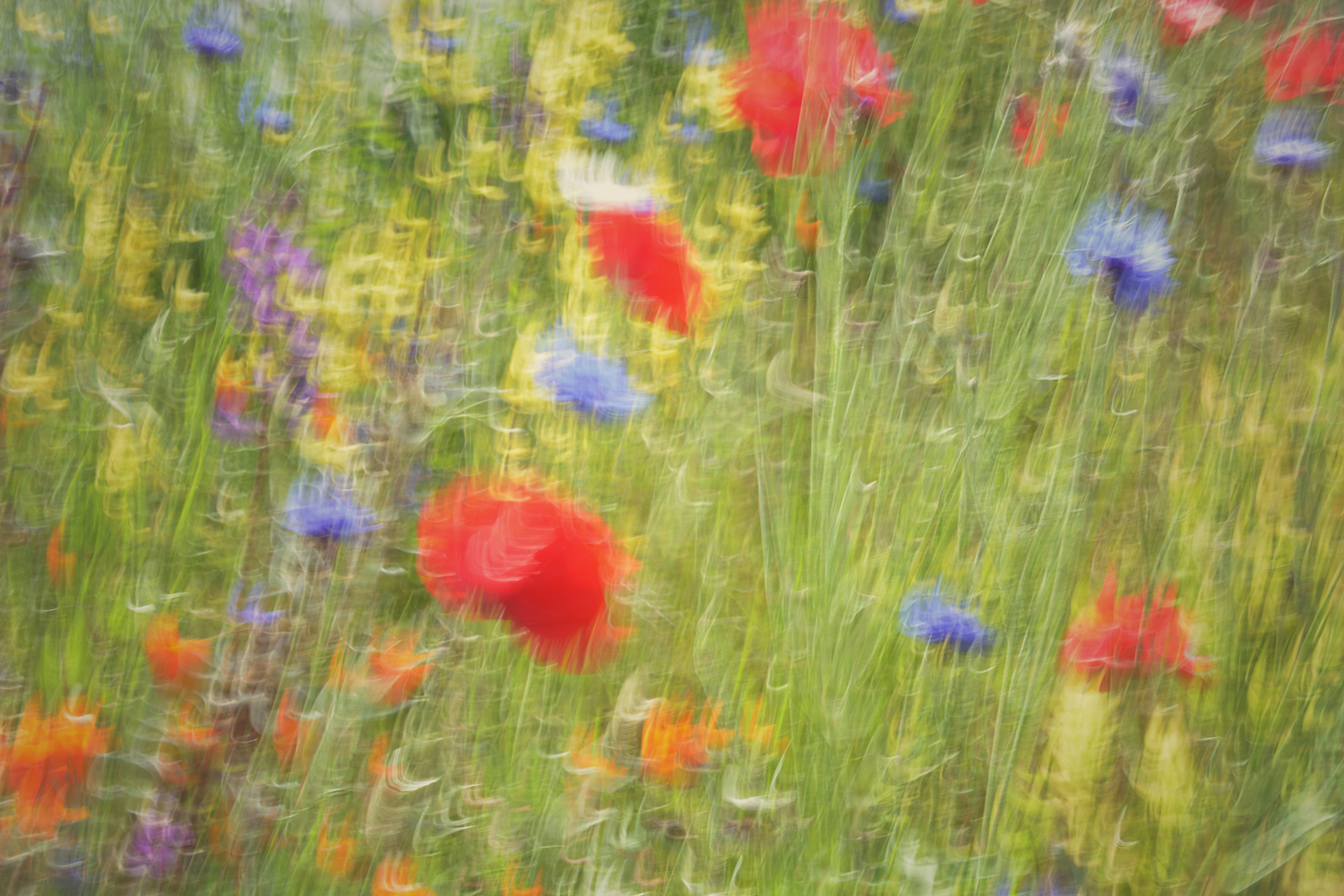
Past Tense, Surfacing
Never a strong swimmer, but fervent
for the seclusion of the sea, I’d brave a steep
descent to any cove & tumble past the beached
canoes without salutation to become simple
in my buoyancy. Slower only by suggestion
once you stretched my belly swollen, I’d slip
all our significance past the shallows, soft
nesting submarines nosing into cold currents
of new depth. I have no word for the almost-
envy of your body—utterly eel—as it took
to things in motion—longboards, rollerskates,
the back of a bull—with magnetism, but we all
felt it. Seized the pleasure in your ease even
among us. Who was the first to notice I couldn’t
say. Some aunties’ lamentation stayed latently
unaware: a plant is only a weed if it’s not wanted.
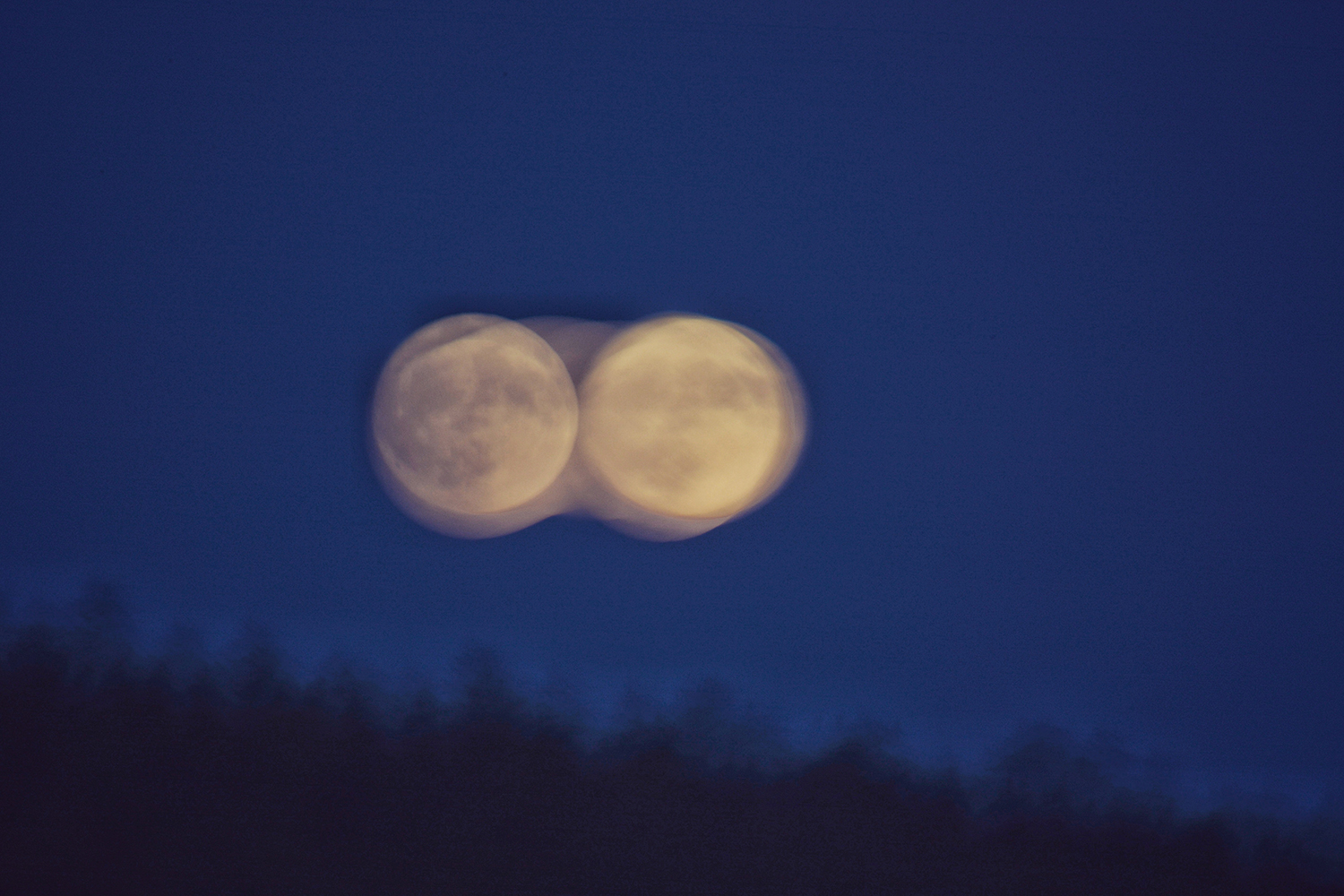
Past Tense, in Double
When you were small, I already knew
the world would feel for you too much
at once & not enough. Reckless with
your smile, prodigy of tears, waggish
charm before you could mount a horse
or chase mongoose through the taro
paddies. Something roguish wicked
away into ache & I worried a stone
between us. You grew to want this life
without me in it. From the plane I could
see the outline of places you know
better than me. I’m here now, waiting
in my chair, tremble as little an offering
as explanation. Is that my child coming out
of the fields? If I didn’t know better, I’d swear
there are two of you instead of one.
Images © Kristin V. Rehder
Present Tense, Amending
I don’t need to understand it. That’s what other mothers
tell me I should say. As if our love adheres to logic
all the more in less wayside stories? I know unconditional
can be a promise or a threat, depending on the quality
of eternity. Sometimes, in sleep, my hands still move
as looms, taking up your long curls & threading them
across the warp of my knuckles. If I made the braid
intricate enough, no one would notice the boy asleep
in your swift steps, your inbound swagger. He’s awake
now, but stays drowsy, your hair shorn like the sheep & to her
fingers’ liking. I once thought it miraculous: a woman so beautiful
might forfeit her own potential, & yours. I’m welcome at this table
you built, like everything else, & only because you were raised to love
by creatures, great & small. She’s slipped a shawl across my shoulders
& a hot mug in my hand. Says I’ll be so proud when I see it in the light.
Poet and essayist Meg Day is the author of Last Psalm at Sea Level (Barrow Street, 2014) and an Associate Professor of English & Creative Writing in the MFA program at North Carolina State University. Find her at www.megday.com.
A writer and documentary photographer, Kristin V. Rehder creates images that connect her Parkinson’s movements to the rhythms and changeability of her natural surroundings. See more of her five-year Tremor project at www.kvrehder.com. On the impact of this collaborative project, Rehder writes: The exchange that is our communion in this series has become a life-giver for me, the photographer. Reading Day’s responses to what I created funnels me back to the original work, illuminates it, and feeds my soul, repeatedly.